Creator Marketing
How to Find Creators for Your Brand in 2026
Finding the right creator is no longer about choosing the biggest audience. Learn where to find creators, what to look for, and how to choose the right collaboration for your brand.
Sharcio
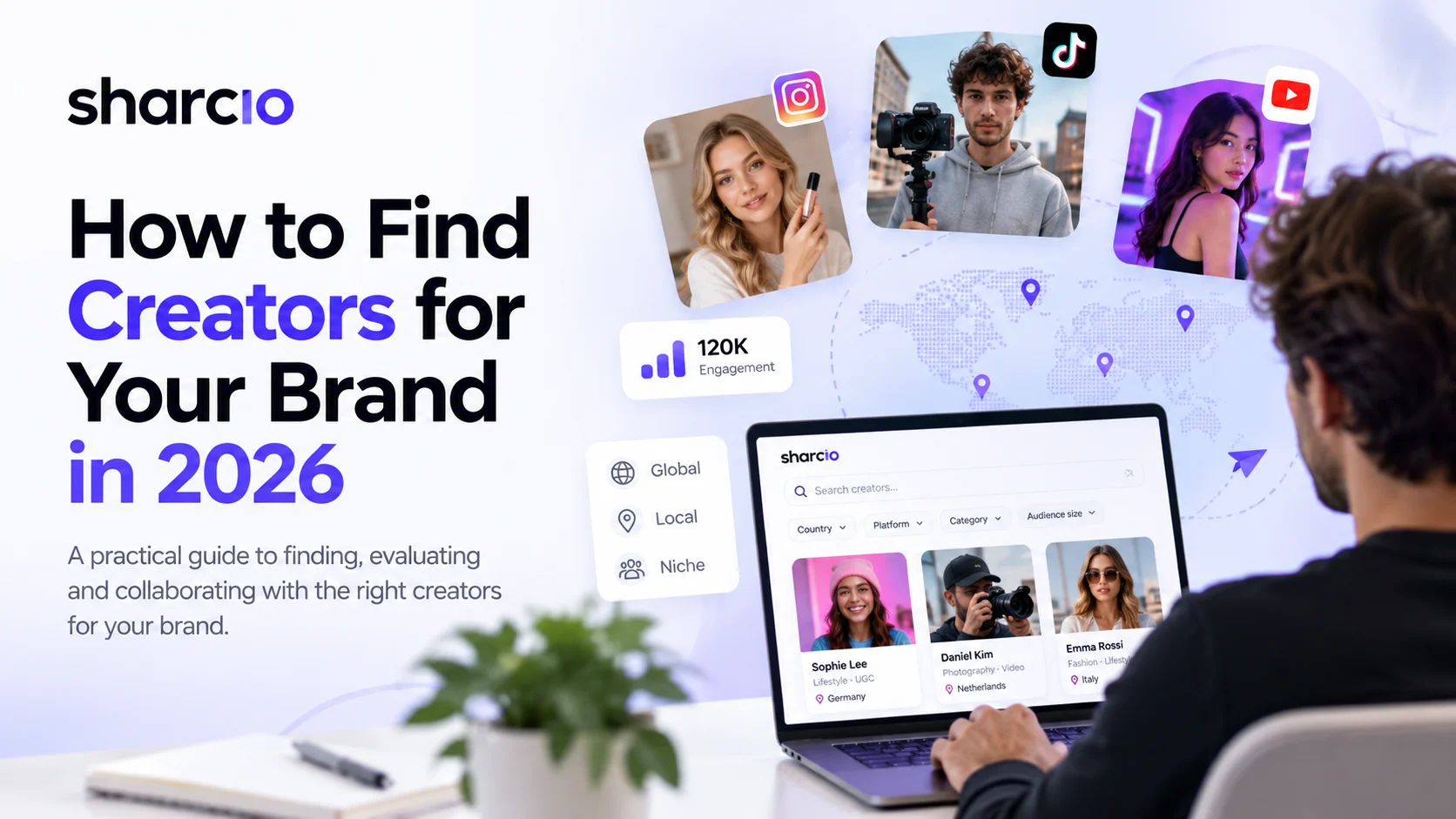
Finding creators for your brand has never been easier. Finding the right creators is a different story.
Brands today can work with influencers, UGC creators, photographers, videographers, designers, streamers, copywriters and other creative professionals. That creates far more opportunities — but it also means follower count alone is no longer enough to decide who is worth working with.
The right creator depends on what you actually want to achieve.
Do you need someone with an audience? Someone who can produce authentic videos for your ads? A photographer for a product launch? A creator in a specific country? Or someone who could become a long-term face of your brand?
This guide explains how to find creators for your brand in 2026, how to evaluate them and how to choose a collaboration that makes sense.
1. Start With the Goal, Not the Creator
Before searching for creators, decide what you want the collaboration to accomplish.
Your goal might be:
- brand awareness
- product discovery
- sales
- app downloads
- social media content
- UGC for paid advertising
- product photography
- entering a new country or market
- building a long-term brand partnership
Different goals require different creators.
A creator with 200,000 followers might be useful when you want distribution and awareness. But if you simply need five authentic product videos for advertising, a skilled UGC creator with a small audience — or even no meaningful audience at all — could be a much better choice.
That distinction should shape your entire search.
2. Decide What Type of Creator You Need
“Creator” is a much broader category than “influencer.”
Influencers
Influencers bring both content and access to an existing audience.
They can be useful when you want your product or brand to appear directly in front of their followers and wider platform audience.
Look at more than follower count. Consider their niche, recent content, engagement, audience and whether your brand would naturally fit their profile.
UGC Creators
UGC creators primarily create content for brands.
The content might appear on your own TikTok or Instagram account, product pages or paid advertising rather than being distributed through the creator's personal audience.
For this kind of collaboration, production ability, communication style and understanding of short-form content can matter much more than audience size.
Photographers and Videographers
Not every creator collaboration needs to revolve around an influencer post.
Brands also need professional product photography, lifestyle content, event coverage and video production.
For these creators, portfolio quality and relevant experience should usually carry more weight than social reach.
Designers, Copywriters and Other Creatives
Creator marketing can extend beyond photos and videos.
Designers, copywriters, AI creators, social media specialists and other creative professionals can all contribute to campaigns.
Choose the skill set according to the result you need rather than forcing every campaign into an influencer-marketing model.
3. Search Where the Right Creators Actually Are
There is no single best place to find every creator.
Social Platforms
Instagram, TikTok, YouTube and other social platforms remain obvious places to discover creators.
Search for:
- topics related to your product
- your industry
- locations
- relevant keywords and hashtags
- creators already talking about products similar to yours
This approach can work particularly well when you want to understand someone's content style before making contact.
The disadvantage is time. Finding and comparing dozens or hundreds of suitable creators manually can become difficult quickly.
Your Existing Community
Sometimes the right creator already knows your brand.
Look at customers who tag your products, people commenting regularly on your content and creators who already follow or mention your company.
Existing familiarity can make a collaboration feel more natural.
Creator Platforms and Marketplaces
Creator platforms can make discovery easier by bringing profiles and collaboration opportunities into one place.
Instead of searching individual social networks separately, brands can look for creators using criteria such as country, platform, category, audience size or collaboration type.
This is also the idea behind Sharcio: giving creators a place to present themselves while giving brands a simpler way to discover potential collaborators.
4. Don't Choose Creators by Followers Alone
Follower count is useful context, but it should not be your entire selection strategy.
Modern recommendation feeds can distribute content far beyond someone's existing followers. Content relevance and creator-brand fit can therefore matter alongside traditional audience metrics.
Ask:
- Is the content genuinely good?
- Does the creator understand the niche?
- Would their style fit our brand?
- Who engages with their content?
- Are recent posts receiving meaningful interaction?
- Does the creator communicate naturally?
- Is their audience relevant to the market we want to reach?
Ten thousand relevant followers can be more valuable than hundreds of thousands of people who have little interest in your product.
And when hiring someone purely to produce UGC, follower count may not matter at all.
5. Think About Country and Language
A creator can make excellent content and still be wrong for your campaign.
If you sell primarily in Germany, a creator whose audience is overwhelmingly elsewhere might deliver impressive engagement without meaningful business results.

 Czech Republic
Elly
Lifestyle Creator
 InstagramInstagram 250
 TikTokTikTok 500
 YouTubeYouTube 0
From €200
View creator →
Consider:
- creator location
- audience location
- language
- cultural relevance
- where your product is available
- shipping limitations
- currencies and pricing
- local regulations where relevant
For international campaigns, it can make sense to work with several smaller local creators rather than one large global account.
6. Choose the Right Collaboration Model
Creator partnerships do not all have to work the same way.
Paid Collaboration
The brand pays an agreed fee for specific deliverables.
Define exactly what you expect before work begins.
Product or Barter Collaboration
A creator receives a product or service in exchange for agreed content or another deliverable.
This can work for suitable products and creators, but receiving a free product should not automatically create an expectation of unlimited work.
Affiliate Collaboration
The creator earns based on tracked sales or another agreed result.
Affiliate arrangements can work particularly well when the creator genuinely uses and recommends the product.
Long-Term Partnership
Instead of constantly finding new people for individual posts, a brand can build an ongoing relationship with creators who consistently perform well and fit its identity.
Long-term relationships can also make sponsored content feel more credible because the audience repeatedly sees a genuine connection between the creator and the brand.
7. Check the Creator Before Reaching Out
Once you have a shortlist, spend a few minutes checking each creator manually.
Look at their recent work rather than judging the account from one viral post.
Check:
- recent content quality
- consistency
- comments and engagement
- previous sponsored content
- portfolio examples
- brand fit
- communication style
- obvious fake or irrelevant engagement
- whether previous partnerships feel natural
For UGC creators, watch several recent examples.
Can they speak naturally on camera? Is the audio clear? Can they create a strong opening? Does their content look native to the platform rather than like a traditional advertisement?
8. Send a Clear Collaboration Offer
Creators receive vague messages all the time.
“Hi, would you like to collaborate?” gives them almost no useful information.
A better first message explains:
- who you are
- why you selected them
- what you want
- which platform or content format is involved
- whether the collaboration is paid, barter, affiliate or another model
- the expected timeline
- what happens next
You do not need to send a five-page brief in the first message.
You do need to make the opportunity understandable.
9. Agree on the Important Details
Before content is produced, make sure both sides understand the arrangement.
Depending on the collaboration, this may include:
- deliverables
- deadlines
- compensation
- revisions
- publishing date
- usage rights
- paid advertising rights
- exclusivity
- disclosure requirements
- cancellation terms
Usage rights are particularly important when you plan to reuse creator content in advertising or elsewhere outside the original post.
A successful creator partnership should be clear for both sides before the work begins.
10. Measure the Result That Actually Matters
The biggest number on the screen is not necessarily the most important one.
What you measure should depend on your original goal.
For awareness, you might look at reach, views and engagement.
For performance campaigns, you may care more about:
- clicks
- leads
- sales
- conversions
- app installs
- cost per acquisition
For UGC production, the creator may not distribute the content at all. The useful question becomes whether the content performs when your brand publishes or advertises it.
Start with the objective and measure against that objective.
11. Build Relationships With Creators Who Work
Finding a great creator once is valuable.
Finding someone you can work with repeatedly is better.
When a collaboration performs well, consider continuing the relationship instead of starting your search from zero for every campaign.
The creator already understands your product, expectations and audience. Your brand understands how they work.
Over time, that can make collaboration faster, more consistent and more authentic.
A Simple Creator Search Checklist
Before contacting a creator, ask:
- What is our campaign goal?
- What type of creator do we need?
- Which country and language matter?
- Which platforms matter?
- Do we need an audience, content production or both?
- Does their recent content fit our brand?
- Is their audience relevant?
- What collaboration model are we offering?
- What is our budget?
- What usage rights do we need?
- Could this become a long-term partnership?
If you can answer those questions, finding the right creator becomes much easier.
Finding Creators Should Be About Fit
The creator economy gives brands access to an enormous range of talent.
The challenge in 2026 is not simply finding someone with followers. It is finding someone whose skills, content, audience and way of working match what your brand is trying to achieve.
Sometimes that will be a large influencer.
Sometimes it will be a micro creator with a highly relevant community.
Sometimes it will be a UGC creator with almost no audience at all.
And sometimes the right person will be a photographer, videographer, designer or another creative professional.
Sharcio is being built around that broader idea: helping creators present what they can offer and helping brands discover people who fit the collaboration they actually need.
The best creator is not necessarily the biggest one.
It is the right one.